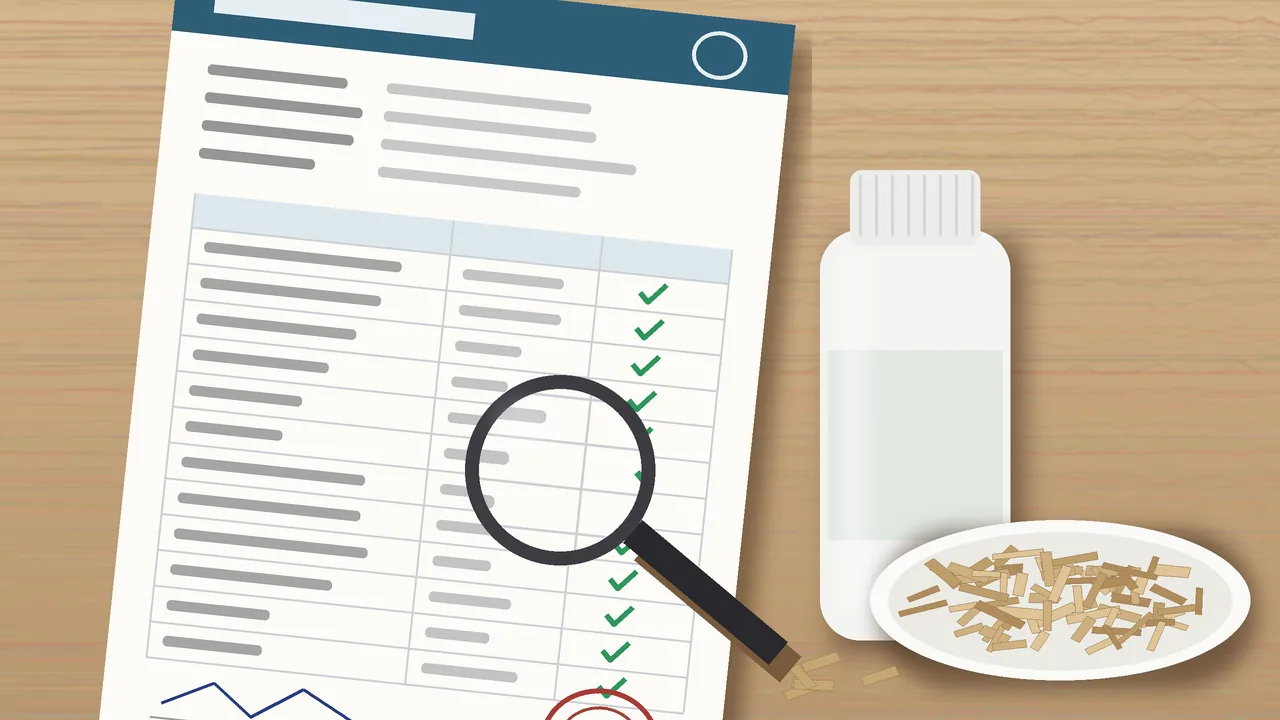
Here is how to read a tongkat ali COA in under five minutes: confirm an independent, ISO/IEC 17025-accredited lab ran the tests, match the lot number to your bottle, then check that eurycomanone was measured by HPLC and that lead, arsenic, cadmium, mercury, microbes and hidden erectile-dysfunction drugs were each tested with a number, a unit and a limit. A certificate of analysis (COA) only tells you what was in one tested batch, so a missing, unsigned or mismatched report is itself the answer.
Last updated: November 24, 2026 · By Victor Mayfield
Note: This is general information, not medical advice. A clean COA says nothing about whether tongkat ali is right for you. Talk to your doctor or pharmacist before taking it, especially if you take prescription medicines or have heart, blood pressure, liver or kidney problems.
Why I ask for a COA before I buy
In my chemical engineering career, the certificate of analysis was the first page of any batch record I read. Supplements get no government gate: safety research is not required before a supplement is sold, and the FDA acts only once it is on the market (NIH ODS). Makers must, however, set specifications for identity, purity, strength, composition and contaminant limits (21 CFR 111.70). The COA is where those numbers show up. For quality seals, see what “third-party tested” really means.
Tongkat ali needs extra scrutiny. In a Malaysian survey of 100 tongkat ali products, 26% contained 0.53 to 2.35 ppm of mercury, above the local 0.5 ppm limit (Ang and Lee, 2006). A DNA-barcoding study found only 37% of tested products authentic and 27% adulterated (Abubakar et al., 2018).
How to read a tongkat ali COA in 7 steps
Step 1: Find out who actually ran the tests
Look for a named laboratory and a report number. ISO/IEC 17025 is the standard that lets testing labs show they operate competently and generate valid results (ISO). Accreditation covers specific tests, so check that the methods on your report fall within the lab’s listed scope. Be wary of brand letterhead with no lab named. One brand COA I downloaded said it was “computer generated,” needed “no signature,” and was based on its supplier’s COA.
Step 2: Match the lot and the sample
Compare the lot number with the code on your bottle, character by character. Then check what was tested: raw root, bulk extract or finished capsules. An ingredient COA does not cover the capsule shell. HerbalGram reports a 2012 case in which tadalafil was found in the gelatin capsules, not in the tongkat extract inside (HerbalGram).
Step 3: Check identity and the marker assay
The report should name Eurycoma longifolia root. The standardized water extract that the European Food Safety Authority reviewed listed glycosaponins at 40 to 65% and eurycomanone at 0.8 to 1.5% (EFSA, 2021). Note the method beside each number. An extract maker’s summary of Malaysia’s standard (MS 2409:2011) lists eurycomanone by HPLC and glycosaponins by gravimetric analysis (Biotropics). HPLC measures the specific molecule; a gravimetric figure weighs a broad fraction. A UV-Vis assay can be inflated by unrelated compounds and is not the same claim as HPLC (Bionutricia). When researchers ran a validated HPLC method on eight store-bought products, only five contained detectable tongkat compounds (Mutschlechner et al., 2018). A “200:1” ratio is not an assay at all.
Step 4: Convert heavy metals to a daily dose
COAs list metals in ppm, which equals micrograms per gram. Multiply by the grams you take per day. USP’s chapter for supplements, <2232>, sets permitted daily exposures of 5 µg lead, 5 µg cadmium, 15 µg inorganic arsenic and 15 µg total mercury (USP). California’s Proposition 65 warning thresholds are lower for reproductive harm: 0.5 µg/day for lead and 4.1 µg/day for cadmium by mouth (OEHHA). Worked example: 1.0 ppm lead at 0.4 g a day is 0.4 µg of lead, under both. The same lead level in 2 g of raw root powder is 2 µg, over the Prop 65 line. Insist on numbers, not “complies.”
Step 5: Read microbes, pesticides and solvents
Expect total plate count, yeast and mold, and Salmonella and E. coli absent. The FDA notes supplements have been recalled for microbial, pesticide and heavy-metal contamination (FDA). If the label says anything other than a water extract, ask for residual solvents too (Bionutricia). “ND” means not detected above the method’s detection limit, not zero, so look for that limit.
Step 6: Look for an adulterant (PDE-5) screen
HerbalGram cites a 2015 screening of 45 finished products in which 31 contained at least one erectile-dysfunction drug or analog, including a product labeled Tongkat Ali Power Plus that tested positive for sildenafil (HerbalGram). In the U.S., the FDA found desmethyl carbodenafil, a sildenafil-like compound, in Kopi Jantan Tradisional, a male-enhancement herbal coffee that HerbalGram groups with tongkat ali coffees (FDA), and a later lot was recalled for undeclared sildenafil and tadalafil (FDA recall). A good men’s-product COA lists sildenafil, tadalafil, vardenafil and analogs as not detected.
Step 7: Check dates, signatures and signs of editing
Look for sample, test and report dates, and a named, signed reviewer. Industry guidance flags results identical to the specification batch after batch, no methods, metals shown only as “complies” and no signatory as signs of a copy-pasted or fake COA (Bionutricia). My habit: email the lab the report number and ask whether it issued it.
A good COA vs a red-flag COA
| What to check | A good COA shows | A red-flag COA shows |
|---|---|---|
| Lab | Named lab, report number, ISO/IEC 17025 scope you can check | Brand letterhead only, or “based on supplier COA” |
| Lot | Same lot as your bottle; finished product tested | No lot, a different lot, or raw material only |
| Identity and marker | Eurycoma longifolia root; eurycomanone by HPLC with a measured value | Only an extract ratio, or an assay with no method |
| Heavy metals | Pb, As, Cd, Hg each with a number, unit and limit | “Complies” or “pass” with no numbers |
| Microbes, pesticides, solvents | Counts and screens listed | Missing |
| Adulterants | PDE-5 drugs and analogs: not detected, with method | Not tested |
| Dates and sign-off | Test and report dates, named signer | Undated, unsigned, results equal the spec every time |
Why some brands won’t share one
Sometimes the reason is innocent: the formula is confidential, or the brand only holds its supplier’s raw-material COA. Sometimes the report doesn’t flatter them. The NIH ODS suggests asking a manufacturer whether it follows good manufacturing practices and has a quality control system to confirm the product contains what the label states and is free of contaminants (NIH ODS). If a brand won’t send a lot-matched COA after that, I move on. Redacting recipes is fair; hiding the contaminant panel is not.
Safety and interaction notes
A perfect COA does not make tongkat ali safe. In 2021 EFSA concluded a standardized tongkat ali root extract may cause DNA damage and that its safety “has not been established under any condition of use” (EFSA, 2021). Hidden sildenafil or tadalafil can interact with nitrates such as nitroglycerin and lower blood pressure to dangerous levels (FDA). If you take heart or blood pressure medicine, talk to your doctor or pharmacist first. I track recalls of natural male enhancement products, and the FDA keeps a tainted sexual enhancement products list. For what the trials showed, see tongkat ali vs maca vs fenugreek and my primer on herbs for male enhancement.
Tongkat ali COA checklist
- ☐ Named independent lab, report number, ISO/IEC 17025 scope covering the tests
- ☐ Lot number matches my bottle, and the finished product was tested
- ☐ Eurycoma longifolia root identity stated, with a method
- ☐ Eurycomanone measured by HPLC, with a real number
- ☐ Lead, arsenic, cadmium and mercury as numbers, converted to µg per day
- ☐ Microbes, pesticides and (for solvent extracts) residual solvents reported
- ☐ PDE-5 drugs and analogs screened and not detected
- ☐ Test date, report date and a named signer; lab confirms the report
- ☐ Brand and product checked against the FDA tainted products list
Where to shop
Disclosure: Some links below are affiliate links. If you buy through them, we may earn a commission, at no extra cost to you. As an Amazon Associate, Natural Enhancement Products earns from qualifying purchases. This is not medical advice; talk with a licensed clinician before using any supplement. Read our full disclosure.
On Amazon, this search for tongkat ali extract, third-party tested is a starting point, not an endorsement. Results include untested products, so ask the seller for a lot-matched COA first.
FAQ
What should a tongkat ali COA include?
A named lab, a lot number matching your bottle, test dates, Eurycoma longifolia root identity, eurycomanone measured by HPLC, and lead, arsenic, cadmium and mercury results in numbers, plus microbes. For men’s products, look for a screen for hidden erectile-dysfunction drugs too.
How can you tell if a COA is fake?
Warning signs include no named lab, no test methods, metals listed only as complies, results identical to the specification batch after batch, and no date or signature. Contact the lab directly and ask whether it issued that report number.
What eurycomanone percentage should a tongkat ali extract have?
The standardized water extract EFSA reviewed listed eurycomanone at 0.8 to 1.5% and glycosaponins at 40 to 65%. Treat that as a consistency benchmark for that extract type, not as proof of any effect.
Does ND on a COA mean the contaminant is not there?
No. ND means not detected above the method’s detection limit. Check that the detection limit is printed and sits below the safety limit you care about.
Is a 200:1 tongkat ali extract stronger than a 50:1 extract?
Not necessarily. A ratio describes how much root went into the extract, not how much eurycomanone came out. Compare the measured eurycomanone result and its method instead.
Sources
- NIH ODS. Frequently Asked Questions.
- 21 CFR 111.70 (eCFR).
- FDA. CGMP final rule backgrounder.
- ISO. ISO/IEC 17025.
- Ang HH, Lee KL. Mercury in tongkat Ali hitam preparations. Food Chem Toxicol, 2006.
- Abubakar BM, et al. Tongkat ali adulteration by DNA barcoding and HPLC. Pharm Biol, 2018.
- Mutschlechner B, et al. HPLC-DAD/ELSD analysis of commercial Eurycoma longifolia products. Fitoterapia, 2018.
- EFSA NDA Panel. Safety of Tongkat Ali root extract as a novel food. EFSA J, 2021.
- Biotropics Malaysia. How to choose a Tongkat Ali extract (manufacturer).
- Bionutricia Extract. How to read a botanical extract CoA (manufacturer).
- USP. Elemental contaminants in dietary supplements (<2232>).
- OEHHA. Proposition 65 safe harbor levels.
- Brinckmann J, Brendler T. Tongkat Ali. HerbalGram 122.
- FDA. Kopi Jantan public notification and 2019 recall.
- FDA. Tainted Sexual Enhancement Products.
Victor Mayfield is a retired chemical engineer from New York.